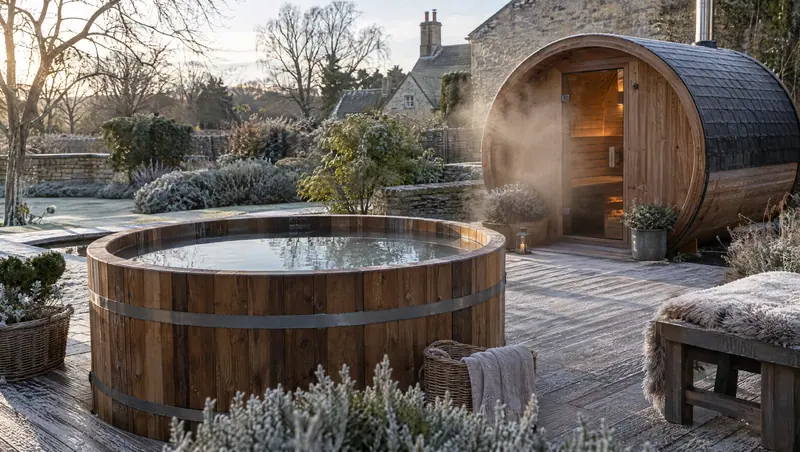
What it takes to put a cold plunge tub next to a garden sauna: the space, the power, the water, the rules, the cost and the safety points.
Putting a cold plunge tub next to a garden sauna is a popular combination, and it’s simpler to plan the two together than to add the tub later. This guide covers the practical side: the space, the power, the water, the rules, the cost and the safety points, using the 489 saunas and 92 cold plunge tubs in our data. It doesn’t cover health effects: we don’t make health claims, and if you have a heart condition or any doubt, talk to your doctor first.
What you need
- The sauna, with its heater and base: see every outdoor sauna and how to choose a garden sauna.
- The tub, with or without a chiller: compare all 92 on cold plunge tubs.
- Power for an electric sauna heater and, if you have one, the chiller.
- Water to fill the tub, and somewhere for it to go when you empty it.
- A level, non-slip area between the two, and a lockable cover for the tub.
Space and layout
The median garden sauna in our data takes up 5.5 m². A rigid plunge tub is much smaller: of the 34 rigid tubs whose retailer gives both length and width, the median takes up about 1.4 m², plus room for the chiller beside it.
- Keep the walk short. Put the tub a few steps from the sauna door, on the same level, with a non-slip path between them. Wet feet and decking can be slippery.
- Think about the weight. Water weighs a kilogram a litre, so a 500-litre tub holds half a tonne before anyone gets in. Both the sauna and the tub need a firm, level base.
- Give the chiller room. It needs a dry spot with airflow, close enough for its hoses.
- Check the planning limits. In England, buildings, enclosures and containers mustn’t cover more than half the land around the original house, and the sauna counts towards that. See below.
Power: two loads, one plan
An electric sauna heater is a big load: most garden sauna heaters are 4.5 kW to 9 kW and need their own circuit from the consumer unit. A chiller is far smaller, typically a few hundred watts to about a kilowatt, and many plug into a standard socket.
- The sauna heater needs a dedicated circuit, installed by a registered electrician. In England, a new circuit is notifiable work under Part P. Our electrical supply calculator shows what your heater will draw.
- The chiller needs a weatherproof socket with RCD protection. Electrical Safety First advises using an RCD with all outdoor electrical equipment, and only outdoor-rated extension leads, if any.
- Plan both together. Ask the electrician to quote for the sauna circuit and an outdoor socket for the chiller at the same time; planning both at once can save a second visit and a second cable run.
Sources: IET: Part P (England and Wales) - Frequently asked questions; GOV.UK: Approved Document P (2013 edition); Electrical Safety First: Electrical safety advice for the garden. Checked 30 September 2026.
Water: filling, cleaning and draining
Most tubs are filled from a garden hose. Without a chiller and filter, you’ll change the water more often. With one, follow the maker’s instructions on filters, sanitising and water changes.
HSE lists water between 20°C and 45°C, and water that is stored or recirculated, among the conditions in which legionella bacteria can grow. A tub that sits in the summer sun, or one whose chiller also heats, can reach that range, so keep it clean, covered and maintained as the maker says. And plan where the water goes when you empty a tub that may hold hundreds of litres.
Sources: HSE: What Legionnaires' disease is and typical symptoms. Checked 30 September 2026.
Planning permission
The sauna is an outbuilding, so the usual permitted development limits apply: our planning permission checker runs through them. In England, a swimming or other pool used for purposes incidental to the house also falls under householder permitted development (Class E), with limits for listed buildings and designated land. We haven’t found official guidance on freestanding tubs. If you’re sinking a tub into the ground, building a structure over it, or you’re on designated land, ask your council.
Sources: legislation.gov.uk: GPDO 2015 Schedule 2 Part 1 Class E – buildings etc incidental to the enjoyment of a dwellinghouse; Planning Portal: Outbuildings. Checked 30 September 2026.
What it costs
From the prices in our data, checked on 30 September 2026:
| Item | From our data |
|---|---|
| Four-seat barrel sauna with a heater | median £4,612 |
| Inflatable plunge tub, no chiller | median £299, from £69 |
| Rigid plunge tub with a chiller | median £4,996, from £2,499 |
| Standalone chiller, to add to a tub | £499 to £3,995 |
| Sauna electrics | Steam & Oak’s estimates: £400 to £1,500; get a quote |
| Bases for both | get a quote |
And to run, at the Ofgem price cap of 26.32p per kWh: about £1.97 a session for a 6 kW sauna, on our running cost assumptions, and about £0.70 a day for a chiller drawing 445 W that runs 6 hours a day. Try your own figures in the garden sauna cost calculator and the cold plunge running cost calculator.
Buying both from one retailer
6 retailers in our data sell both garden saunas and cold plunge tubs: Polar Recovery, Outdoor Living Hot Tubs, Steam & Oak, Balance Recovery, EdenHut, Nuovo Luxury. Buying both together can mean one delivery and one set of terms, but compare each on its own merits: UK sauna retailers compared sets out their delivery, warranty and returns terms.
Safety
- Cold water shock. The RNLI says sudden cooling of the skin causes an involuntary gasp and raises the heart rate and blood pressure, and advises anyone trying cold water dipping for the first time to speak to a health professional about the risks. The British Heart Foundation says people with a heart condition should discuss the risks with their doctor or nurse first.
- Children. The Child Accident Prevention Trust says small children can drown in just a few centimetres of water at home. Keep the tub covered and locked when it isn’t in use.
- Heat and electrics. Follow the sauna heater’s and chiller’s instructions, keep plugs and sockets dry, and use RCD protection outdoors.
Sources: RNLI: Cold water shock; RNLI: Open water swimming; British Heart Foundation: Cold water swimming: is it bad for your heart?; Child Accident Prevention Trust: Child drowning prevention: Water safety for kids. Checked 30 September 2026.